Ceramic Coating vs. Wax: What Actually Protects Your Paint in Texas Heat
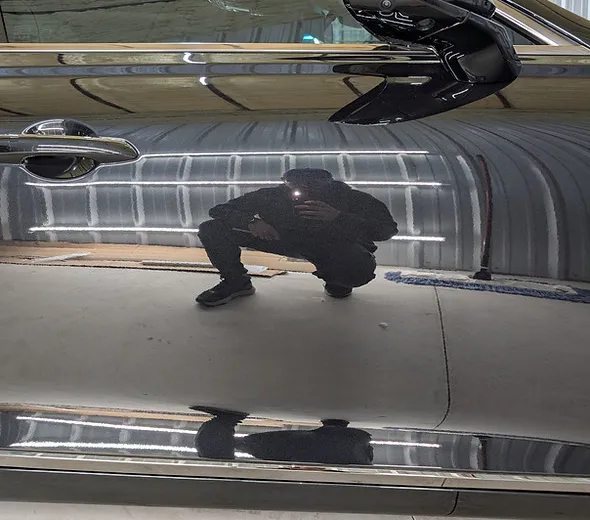
If you’ve waxed a car in a Texas summer, you already know the problem: apply it on Saturday, and by the following weekend it’s already looking thin. Direct sun, 100°F+ asphalt heat, and UV exposure break down traditional carnauba and synthetic waxes fast. That’s not a knock on wax — it’s just not built for what Central Texas throws at a vehicle’s finish for six months of the year.
Ceramic coating solves a different problem than wax ever tried to solve, which is why comparing them head-to-head only tells half the story.
What Wax Actually Does
Wax sits on top of your clear coat as a sacrificial layer. It adds gloss, some water beading, and a thin barrier against contaminants — but it’s a soft, temporary layer by design. Heat, rain, and repeated washing strip it down in weeks. Most drivers who wax regularly are re-applying every 4 to 8 weeks just to maintain baseline protection, more often in peak summer.
What Ceramic Coating Actually Does
A ceramic coating is a liquid polymer that chemically bonds to your clear coat rather than sitting on top of it. Once cured, it forms a hard, glass-like layer that:
- Resists UV fade — the coating itself absorbs UV stress instead of your factory clear coat taking the hit over years of sun exposure
- Sheds water and contaminants — the hydrophobic surface means brake dust, bug splatter, and road grime have a harder time bonding, so washes take minutes instead of an afternoon
- Resists light scratches and swirl marks — every Detail Now ceramic package includes self-healing performance, where light marks disappear with heat instead of staying etched into the surface
- Lasts years, not weeks — our packages run from 1 to 9 years of performance depending on tier, all insurance-backed and nationally warrantied
The Trade-Off Nobody Tells You About
Ceramic coating isn’t magic, and it isn’t a substitute for paint correction. If your paint already has swirl marks, oxidation, or scratches, coating over them locks that condition in — the coating protects whatever state the paint is in when it goes on. That’s why every ceramic coating job at our studio starts with a full paint correction pass, not just a quick polish.
It’s also worth being honest about what ceramic coating doesn’t do: it won’t stop a rock chip on I-35. Ceramic coating is a chemical-resistant, UV-resistant hard shell — it doesn’t absorb physical impact the way paint protection film does. If rock chips are your main worry on a regular Austin commute, that’s a PPF conversation, not a ceramic coating one (many of our customers run both together).
Which Actually Makes Sense for a Daily Driver?
If you’re commuting through Taylor, Round Rock, Georgetown, or the Austin metro daily and want your paint to still look right in three years — not just after Saturday’s wash — ceramic coating is the tool built for that job. Wax has a place for someone doing a full weekend detail routine every month and enjoying the process. For everyone else, a properly applied and correctly maintained ceramic coating is doing more work with less upkeep.
Curious what a specific package looks like for your vehicle? See our Ceramic Coating page for the full tier breakdown, or request a free quote and we’ll walk you through what makes sense for how you actually drive.
Frequently Asked Questions
Can I apply wax over a ceramic coating?
You can, but it's usually a waste of money — a quality ceramic coating already outperforms wax on gloss, hydrophobic behavior, and UV resistance. If you want extra slickness between washes, a dedicated ceramic spray topper is a better match than traditional carnauba wax.
Is ceramic coating worth it if I only wax twice a year anyway?
That's exactly the profile it helps most. If waxing twice a year, your paint is unprotected most of the year. A ceramic coating gives continuous protection for 1 to 9 years depending on the package, instead of a few weeks of wax performance.
Does ceramic coating eliminate the need to wash my car?
No — you still need to wash regularly, but washes take a fraction of the time because dirt and water don't cling to the surface the way they do on bare or waxed paint.