PPF vs Ceramic Coating: Do You Need Both?
This is the single most common question we get, and it makes sense — both PPF and ceramic coating get talked about as “paint protection,” so it’s easy to assume they do the same job. They don’t. They protect against completely different things, and understanding the difference is the fastest way to figure out what your vehicle actually needs.
Paint Protection Film: Physical Impact Protection
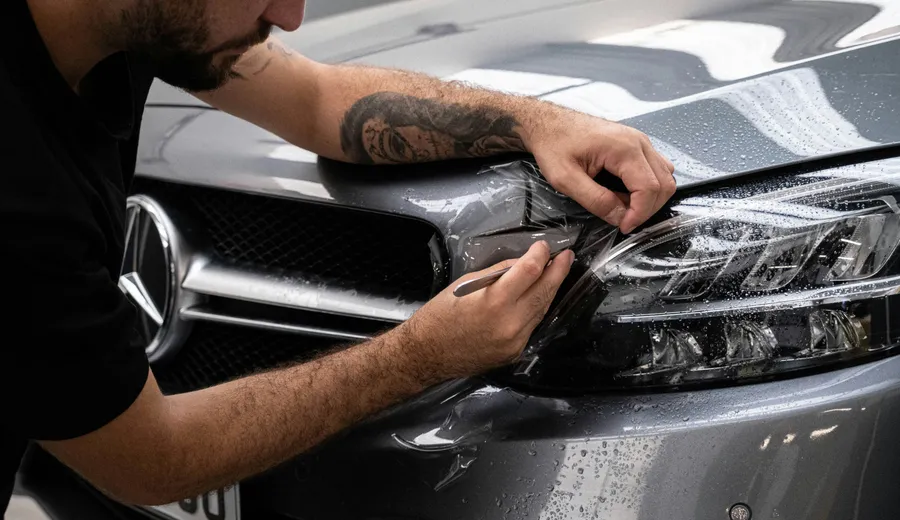
PPF (paint protection film) is a thick, clear urethane film applied directly to your vehicle’s panels — typically the hood, fenders, mirrors, and front bumper, since that’s where highway rock chips concentrate. Its job is purely physical: it absorbs the impact of a rock chip, road debris, or a minor scrape before that impact ever reaches your factory clear coat.
Our PPF is:
- Self-healing — light swirls and scratches in the film itself disappear with heat
- Lifetime warranted against yellowing, cracking, and delamination
- STEK certified installer work — precision-cut and hand-fitted to your vehicle’s actual panels, not a generic template
What PPF does not do: protect against UV fading on unfilmed panels, make washing meaningfully easier, or add significant gloss on its own (a matte or satin finish film is a different product entirely from the gloss film most customers choose).
Ceramic Coating: Chemical and UV Resistance
Ceramic coating is a liquid polymer that bonds to the clear coat and creates a hard, hydrophobic shell. Its job is chemical and environmental: resisting UV fade, repelling water and contaminants so washing takes minutes instead of hours, and resisting chemical etching from bird droppings, tree sap, and bug acid.
What ceramic coating does not do: stop a rock chip. It’s a hard shell, not an impact-absorbing layer — a rock at highway speed will chip through a ceramic coating exactly like it would chip bare paint.
So Which One Do You Need?
Ask yourself what you’re actually trying to prevent:
| Concern | Better Fit |
|---|---|
| Rock chips from I-35 or highway driving | PPF |
| Paint fading from Texas sun over years | Ceramic Coating |
| Washing taking too long / water spots | Ceramic Coating |
| Protecting a brand-new car’s factory paint from day one | Both — PPF on high-impact panels, ceramic over the full vehicle |
| Track day brake dust and fallout | Ceramic Coating (see our post on I-35 rock chips for the PPF side of track and commute driving) |
Why So Many Customers Run Both
The two products solve non-overlapping problems, which is exactly why pairing them is so common — PPF on the hood, fenders, mirrors, and bumper for impact protection, with a ceramic coating over the film and the rest of the vehicle for gloss, hydrophobic performance, and UV resistance everywhere else. It’s not redundant; it’s covering two different failure modes with the tool built for each one.
If you’re not sure which makes sense for your specific vehicle and how you drive it, that’s exactly the conversation to have before booking anything. See our PPF page and Ceramic Coating page for the specifics, or request a free quote and we’ll scope it honestly — including telling you when you only need one, not both.
Frequently Asked Questions
Can you put ceramic coating over PPF?
Yes, and it's a common combination. Ceramic coating over PPF adds extra gloss, easier cleaning, and additional UV and chemical resistance on top of the film's physical impact protection.
Which should I get first if I can only afford one?
It depends on your driving. If you're worried about rock chips from highway commuting, PPF addresses that directly. If your main concern is fading, water spots, and long-term shine with less washing effort, ceramic coating is the better first step.
Does PPF change how the car looks?
High-quality PPF is designed to be virtually invisible when installed correctly — it shouldn't add a visible tint or texture. You should not be able to tell it's there except where the edges are, which our installers finish clean and hand-fitted.